
Renaming your Azure subscription is essential when you are using multiple subscriptions. In this article, I will walk you through multiple ways.
How to rename Azure Subscription
There are 2 simple approaches available to rename your Azure subscription.
- Approach-1: Using Azure Portal
- Approach-2: Using Azure CLI
Approach-1: Using Azure Portal
To rename Azure Subscription, Follow the below quick steps
- Login to Azure Portal.
- Click on the Show Portal menu from the top left and then click on the Cost Management + Billing link, as shown in the screenshot below.

3. Click on your subscription name.

4. Click on the Rename button as shown below.

5. Enter the new subscription name and ensure to click on the Save button.

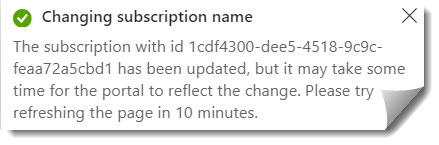
My Azure subscription’s new name has been updated successfully. Check out the screenshot below. Wait 10 minutes and refresh the page to see the new name.
You can see below the new name of my Azure subscription.

Approach-2: Using Azure CLI
Execute the below Azure CLI command to rename your Azure subscription.
az account subscription rename --subscription-id "Your subcription id" --name "New name for your Azure subscription"Example
Execute the below Azure CLI command to change the Azure subscription name from Visual Studio Enterprise to “Visual Studio Enterprise change”.
az account subscription rename --subscription-id "1cdf4300-dee5-4518-9c9c-feaa72a5cbd1" --name "Visual Studio Enterprise change"After executing the above command, I got the output as expected, as shown in the screenshot below.

Now, my Azure subscription name has been changed successfully. Check out the screenshot below.

You may like following the articles below

I am Rajkishore, and I am a Microsoft Certified IT Consultant. I have over 14 years of experience in Microsoft Azure and AWS, with good experience in Azure Functions, Storage, Virtual Machines, Logic Apps, PowerShell Commands, CLI Commands, Machine Learning, AI, Azure Cognitive Services, DevOps, etc. Not only that, I do have good real-time experience in designing and developing cloud-native data integrations on Azure or AWS, etc. I hope you will learn from these practical Azure tutorials. Read more.