
Earning this certification proves that you possess the hands-on technical proficiency required to manage, secure, scale, and monitor mission-critical cloud resources across an enterprise footprint. This guide covers Azure Administrator Certification the AZ-104 exam architecture, domain breakdowns, study strategies, and career impact.
Azure Administrator Certification
What Is the Azure Administrator Certification?
The Azure Administrator Associate certification validates your ability to implement, manage, and monitor an organization’s identity, governance, compute, storage, and virtual networking infrastructure within Microsoft Azure.
Unlike foundational certifications (such as AZ-900), which focus primarily on cloud terminology and basic billing models, the AZ-104 is an associate-level, role-based examination. It tests your operational competence.
Candidates are evaluated on how they handle administrative scenarios, diagnose network misconfigurations, enforce zero-trust role assignments, and optimize infrastructure costs.
AZ-104 Exam Specifications
| Exam Detail | Specification |
| Exam Code | AZ-104 |
| Official Title | Microsoft Certified: Azure Administrator Associate |
| Exam Duration | 100 minutes (120 minutes total seat time) |
| Number of Questions | 40–60 questions (varies by form) |
| Question Formats | Multiple-choice, Drag-and-drop, Hot Area, Case Studies |
| Passing Score | 700 / 1000 (scaled score) |
| Exam Cost (USA) | $165 USD |
| Prerequisites | None formally required; 6+ months hands-on experience recommended |
| Renewal Period | 1 year (free online renewal assessment via Microsoft Learn) |
The 5 Core Exam Domains Breakdown
The AZ-104 syllabus is divided into five core domains. Each domain covers a distinct pillar of cloud systems administration.
1. Manage Azure Identities and Governance (20–25%)
This domain focuses on tenant security, user directories, and compliance policies. Cloud administration begins with zero-trust access control and operational guardrails.
- Microsoft Entra ID (formerly Azure AD): Managing user accounts, security groups, enterprise administrative units, guest users, and external identities. You must understand how to configure Self-Service Password Reset (SSPR) and manage licensing at scale.
- Role-Based Access Control (RBAC): Defining custom roles, interpreting inheritance hierarchies, and applying built-in roles (such as Owner, Contributor, Reader, and User Access Administrator) across subscriptions, resource groups, and individual resources.
- Governance and Subscriptions: Implementing Azure Policy to enforce organizational compliance (e.g., restricting deployment regions or requiring specific tags). Configuring resource locks (
ReadOnlyvs.CanNotDelete), organizing Management Groups, and tracking operational budgets through Azure Cost Management.
2. Implement and Manage Storage (15–20%)
Enterprise data management demands deep knowledge of storage tiers, redundancy strategies, and access restrictions.
- Storage Accounts & Security: Provisioning general-purpose v2 storage accounts, configuring storage firewalls and virtual network service endpoints, managing shared access signature (SAS) tokens, and rotating storage access keys.
- Data Redundancy: Understanding the operational trade-offs between Locally Redundant Storage (LRS), Zone-Redundant Storage (ZRS), Geo-Redundant Storage (GRS), and Geo-Zone-Redundant Storage (GZRS).
- Azure Blob Storage & Azure Files: Setting up hot, cool, cold, and archive blob access tiers. Configuring blob lifecycle management rules, versioning, object replication, and immutable storage policies. For Azure Files, mastering SMB/NFS share setups, Azure File Sync orchestration, and soft-delete recovery windows.
3. Deploy and Manage Azure Compute Resources (20–25%)
Compute resources form the workload engine of your infrastructure. This section tests both traditional Infrastructure as a Service (IaaS) and containerized workloads.
- Virtual Machine (VM) Provisioning: Sizing virtual machines, configuring data disks, setting up encryption at host, and planning high availability using Availability Sets (fault domains and update domains) and Availability Zones.
- Virtual Machine Scale Sets (VMSS): Configuring horizontal auto-scaling rules based on CPU and memory thresholds to balance cost and availability.
- Containers and Serverless Platforms: Deploying and scaling applications across Azure Container Instances (ACI), managing images in Azure Container Registry (ACR), and hosting microservices within Azure Container Apps (ACA).
- Azure App Service: Configuring App Service plans, deployment slots, custom domain bindings, managed TLS/SSL certificates, and automated scale-up/scale-out triggers.
4. Configure and Manage Virtual Networking (15–20%)
In my experience evaluating technical exam performance, virtual networking is consistently where most candidates struggle. You must thoroughly understand routing logic and traffic isolation.
- Virtual Network Architecture: Creating Virtual Networks (VNets), designing CIDR subnets, and configuring private and public IP address assignments.
- VNet Peering & Routing: Configuring intra-region and global VNet peering. Implementing User-Defined Routes (UDRs) and custom routing tables to direct traffic through Network Virtual Appliances (NVAs).
- Traffic Filtering and Network Security: Building and evaluating Network Security Groups (NSGs) and Application Security Groups (ASGs). Understanding how priority numbers dictate effective rule evaluation is crucial.
- Connectivity and Load Balancing: Configuring public and internal Azure Load Balancers, Application Gateways, Azure Bastion hosts for secure management, and Azure Private Endpoints / Service Endpoints for PaaS isolation.
5. Monitor and Maintain Azure Resources (10–15%)
Operational resilience requires real-time observability, alerting mechanisms, and disaster recovery planning.
- Azure Monitor & Log Analytics: Deploying Azure Monitor agents, configuring Log Analytics workspaces, writing basic Kusto Query Language (KQL) queries, and reviewing performance metrics across compute and network assets.
- Alerting & Action Groups: Creating metric-based and log-based alert rules, tying them to automated action groups (email notifications, SMS, runbooks, or webhooks).
- Azure Backup & Recovery Services: Configuring Recovery Services Vaults, establishing retention policies for Azure VMs and Azure Files, executing disaster recovery drills with Azure Site Recovery (ASR), and testing point-in-time restores.
Technical Prerequisites & Skill Matrix
While Microsoft does not mandate formal prerequisite certifications prior to attempting AZ-104, you will need a solid foundation across specific IT disciplines to pass the exam confidently.
| Skill Area | Core Knowledge Requirements | Administrative Tooling |
| Operating Systems | Windows Server, Linux (RHEL, Ubuntu) enterprise configuration | Remote Desktop Protocol (RDP), SSH, Bash |
| Networking | TCP/IP, DNS, routing protocols, subnets, CIDR notation, firewalls | Wireshark, Azure Network Watcher, tracert |
| Identity Management | Active Directory Domain Services (AD DS), SAML, OIDC, MFA | Microsoft Entra Admin Center, MSOnline module |
| Infrastructure as Code | Declarative configuration management, parameter files, JSON syntax | Azure CLI, PowerShell (Az module), ARM templates, Bicep |
| Storage Protocols | SMB, NFS, REST APIs, block vs. file storage | Azure Storage Explorer, AzCopy |
Structured 8-Week Preparation Roadmap
Below is the 8-week framework recommend for working professionals.
Phase 1: Identity, Governance & Foundations (Weeks 1–2)
- Focus: Microsoft Entra ID tenants, user/group structures, RBAC assignments, Custom Roles, Azure Policies, Management Groups, and Resource Locks.
- Key Tasks: Map out directory scope hierarchies; build complex RBAC assignments; write custom Azure Policy definitions using JSON syntax.
Phase 2: Storage Infrastructure & Data Lifecycle (Week 3)
- Focus: Storage account configurations, SAS tokens, lifecycle rules, Blob tiers, and Azure File Sync.
- Key Tasks: Evaluate redundancy strategies (LRS vs. GZRS); calculate cost implications of tier transitions (Hot $\to$ Cool $\to$ Archive); configure object replication between distinct subscriptions.
Phase 3: Compute & Container Workloads (Weeks 4–5)
- Focus: IaaS Virtual Machines, Availability Sets vs. Availability Zones, VMSS auto-scaling, ACI, and Azure App Service configurations.
- Key Tasks: Compare compute scaling thresholds; configure host-level disk encryption; map deployment slots and custom domain configurations in App Service.
Phase 4: Virtual Networking Mastery (Week 6)
- Focus: Subnet architecture, VNet peering, Network Security Groups, Route Tables, Load Balancers, and Private Endpoints.
- Key Tasks: Calculate effective security rules across combined subnet-level and NIC-level NSGs; draft hub-and-spoke virtual network peering topologies.
Phase 5: Monitoring, Backup & Mock Drills (Weeks 7–8)
- Focus: Log Analytics workspaces, KQL log queries, metric alert rules, Recovery Services vaults, and full-length practice examinations.
- Key Tasks: Write multi-table KQL queries using
where,summarize, andprojectoperators; take 3 to 4 timed practice tests; review explanations for any incorrect answers.
Common Traps to Avoid During Exam Preparation
- Relying Exclusively on the Graphical Portal: While the Azure Portal is intuitive, the AZ-104 frequently presents scenario questions using Azure CLI commands, PowerShell cmdlets, or ARM/Bicep template snippets. You must be comfortable recognizing syntax patterns across these tools.
- Underestimating NSG Rule Hierarchy: When an NSG is attached to both a subnet and a network interface card (NIC), traffic must pass through both layers. For inbound traffic, the subnet NSG processes first, followed by the NIC NSG. For outbound traffic, the sequence reverses. Confusing this order is a common reason for lost marks.
- Misinterpreting Storage Redundancy Scope: GRS and GZRS replicate data to a paired region located hundreds of miles away. However, secondary read access is only available if you explicitly choose Read-Access Geo-Redundant Storage (RA-GRS) or RA-GZRS.
- Mismanaging Time on Case Studies: AZ-104 exams typically include one or two detailed case studies featuring multiple tabs (Requirements, Environment, Networking, Compliance). Allocate no more than 20 minutes total to the case study section so you have sufficient time for the remaining standalone questions.
Career Value and US Market Outlook
In the United States tech sector, hiring managers view the AZ-104 as a reliable indicator of hands-on cloud capability. The certification opens career pathways toward senior infrastructure, systems engineering, and cloud architecture roles.
US Salary Benchmarks for Azure Certified Professionals
Cloud infrastructure salaries vary across major US economic hubs, but the baseline compensation for verified Azure administrators remains strong across both coastal tech hubs and emerging secondary markets.
| Job Title | Average Base Salary (US National) | Top Metro Ranges (SF, NYC, Seattle, Austin) |
| Cloud Systems Administrator | $105,000 – $125,000 | $120,000 – $145,000 |
| Azure Infrastructure Engineer | $120,000 – $140,000 | $135,000 – $165,000 |
| Senior Cloud Engineer | $140,000 – $165,000 | $155,000 – $190,000 |
| Cloud Solutions Architect | $160,000 – $195,000 | $180,000 – $225,000 |
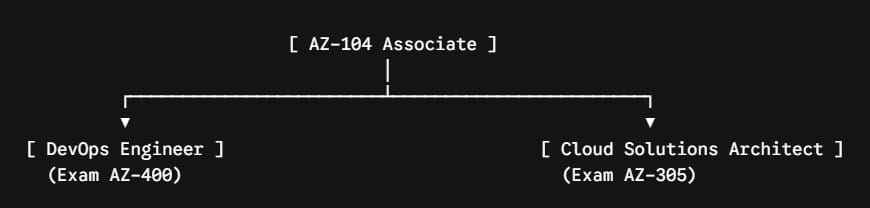
Securing the Azure Administrator Associate credential validates your technical credibility and establishes a solid foundation for advanced credentials, such as the Azure Solutions Architect Expert (AZ-305) or the DevOps Engineer Expert (AZ-400). Committing to a consistent study plan, understanding core architectural trade-offs, and focusing on practical infrastructure management will ensure your success on exam day.
You may also like the following articles:
- How To Get Azure Fundamentals Certification Free
- Which Azure Certification Should I Do First
- Does Azure Fundamentals Certification Expire

I am Rajkishore, and I am a Microsoft Certified IT Consultant. I have over 14 years of experience in Microsoft Azure and AWS, with good experience in Azure Functions, Storage, Virtual Machines, Logic Apps, PowerShell Commands, CLI Commands, Machine Learning, AI, Azure Cognitive Services, DevOps, etc. Not only that, I do have good real-time experience in designing and developing cloud-native data integrations on Azure or AWS, etc. I hope you will learn from these practical Azure tutorials. Read more.
